
 Customer Login
 International Shipsuppliers
 International Marine
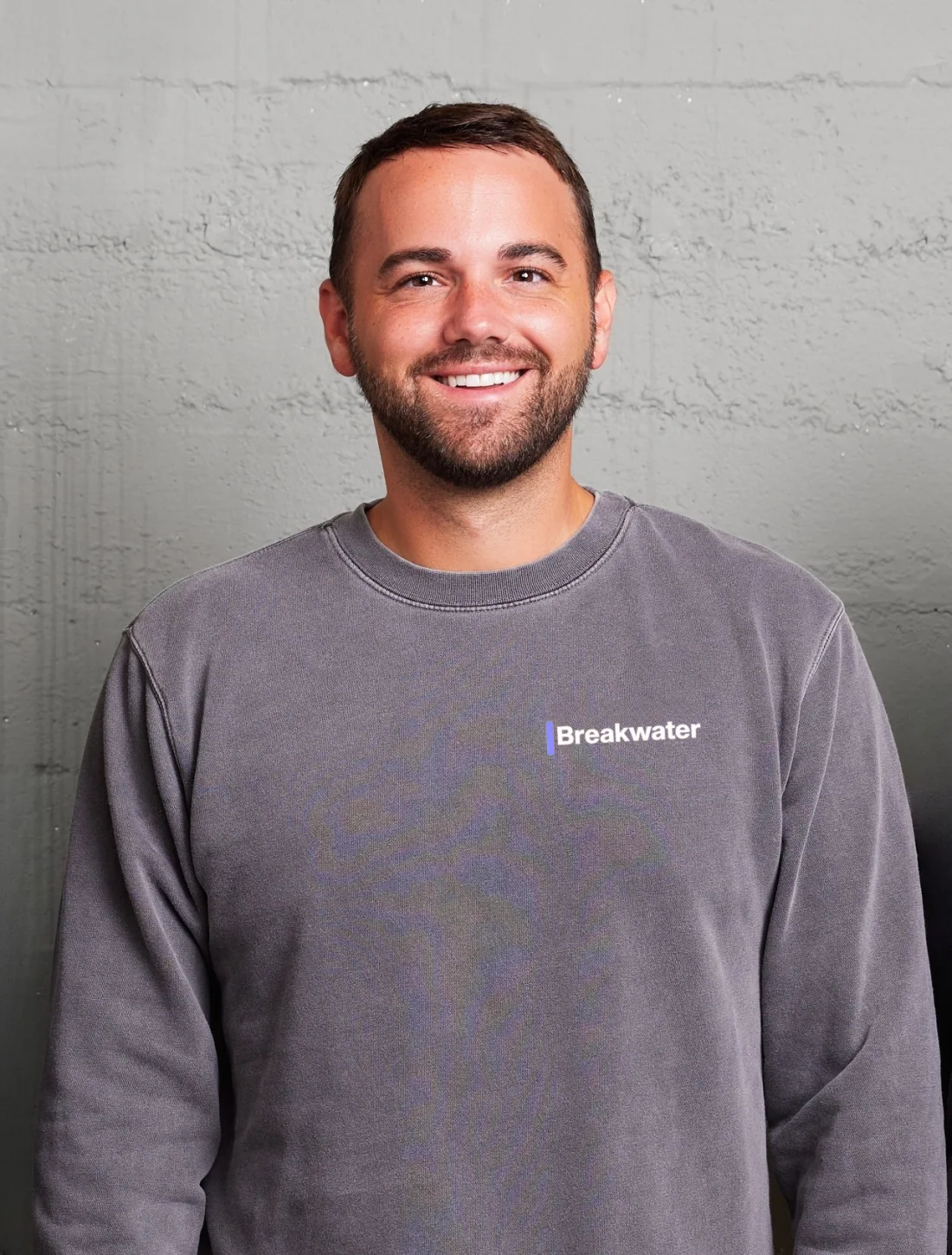
Trapped in an old-school ERP system? Wondering if you can ever leave? Will Rush says too many ship suppliers are still stuck on systems implemented 25 years ago. They may have enabled a few updates and slightly modernized the system, but at the core is still the old infrastructure.
“I see blue-chip ERP systems like the bad girl or boyfriend who keeps you locked up in the house saying, ‘No, you cannot leave,’” he says. “They trap you in their ecosystem. We are strong-minded on data freedom. Hopefully, with our system, we are the girl or boyfriend saying, ‘The door is open. You can take all the data if you want to with one click, but we want you to stay.’ We want to be the best.”
Will is a man on a mission to transform ship supply through AI, but it is a mission that almost did not happen. As the son of Don Rush, owner of Delaware Ship Supply, he seemed destined to be a fifth-generation member of the family firm.
“Growing up, everyone in my family had been a ship supplier for as long as I can remember, and I interned for my dad during high school and college,” he recalls.
But while his brother joined the family firm, Will embarked on a career in technology. He founded an AI software company used by more than 600 schools and universities and has been behind a number of other successful AI-based start-ups. He specializes in building AI-driven workflows that reduce operational cost, labor and manual overhead.
A few years ago, after selling a business to investors, Will was home visiting his parents and considering his next venture.
“My dad had an ERP system that was initially installed in 1988. I was born in 1989,” he says. “They had not changed their technology in so long. They would do quotes by pulling down Excel spreadsheets and did things in a very old-school way. I offered to help him. I did not think this would be the thing that I spent the next years working on.”
And so, the foundations were laid for Breakwater and its Blue Horizon software platform. Will spent weeks studying and analyzing every quote, transaction and item supplied. He combed through spreadsheets, supplier invoices, quote requests, PDFs, email attachments, inventory sheets and pricing documents, then organized the data into a streamlined, consistent format enabled by AI.
Who knew there were dozens of ways to describe asparagus: green, vegetable, long, pointy, fresh, frozen or tinned? Or coriander: fresh cilantro, whole coriander seeds, ground coriander or even, mistakenly, parsley? The concept behind Blue Horizon is to assign specific codes to very specific products.
The first big win
Working on Delaware's systems, Will found he could reduce the time for completing 200-line quotes to seven minutes, the first really big win.
“We turned it on fully and the team would come in and find most of the quotes completed. Some would need humans to revise the out-of-the-ordinary items or any queries. You need humans to be the expert judgment layer on top of the routine work. Dad thought maybe I was waking up at 3am and doing all the quotes in the background before they came into the office, but I was asleep. Pretty quickly it became a way for them to quote more, quote faster and increase the accuracy of the quotes too.”
Every human being makes mistakes. So does AI. Put humans and AI together, and they are right more often.
After the first year, Will moved on to purchase-order acceptance and procurement modules. As technology became part of the workflow, employees became used to working with it.
“One time there was a bug in the app and they could not put a quote through. The employee was happy to wait 30 minutes for me to fix the bug rather than do it the old way in the old system. At this point, I knew I needed to build a team and make it a business.”
Breakwater was created in 2024. After Delaware Ship Supply reported its best year and highest revenue to date, Will and Breakwater Co-Founder Nick Ost started working with other ship suppliers in North America. Many were living in a way that predated AI and were not ready to leap instantly into a completely new operating model. The first goal was to modernize their technology, then help them put AI to work.
Humans as the expert judgment layer
“AI is the topic of the day that everyone wants to talk about, and using AI practically for things that really matter is something we have got good at over time. But generally, the application of modern technology too has enabled the system that we deploy for our customers to be as powerful as possible.”
As with his first work at Delaware, Will says the first step toward implementing Blue Horizon is to spend significant time analyzing historical data and following quotes and orders through to identify the issues.
“Understanding the industry and what companies are dealing with allowed me to refine the AI to make it really effective. And every AI model we build is customized and adapted to the customer's way of work, inventory data, sourcing and so on.”
Blue Horizon can automate quoting and procurement processing and inform pricing strategy. However, Will emphasizes that the system is built for humans to be experts and AI to orchestrate the routine work. People move from doing every step to managing the AI and reviewing its work.
“That transition can be difficult for people. They are so used to doing, not reviewing, and they are worried about losing their job. But once they see the system operate, they realize that the things we have removed with technology are the parts of the job they probably did not like anyway, like typing data sheets, extracting data or understanding the 70 types of asparagus.”
Will believes there will always need to be a human strategy behind what technology and AI do. Breakwater is built on that premise: technology should take on tasks people rarely enjoy while enabling them to do the work that is tactical and strategic.
Resistance remains common in a traditional industry where many businesses are family-owned and technology is often seen as expensive and hard to understand. Teams are used to sweeping floors and stacking boxes as much as sitting at a computer, and that operational reality has not been served well by technology.
“That is why I try to live and breathe the ship supply industry, to understand it properly. We are not building for plumbing companies or other industries, and that means we keep that focus and attention on the workflow.”
Some customers want to keep their ERP and add layers of Breakwater's technology. Others have migrated directly from their ERP to Blue Horizon. “We know the industry well enough to give them a menu of what they might like. And I learn something new with every client.”
Where AI goes next
Will says up to half of the maritime world is doing something with AI, while the other half is continuing with business as usual. He sees quoting as a universal pain point and a safe place for companies to experiment with a clear path to return on investment.
“My first question is, what is stopping you? It can be a competitive advantage to try something with AI. I would say: go experiment, go try things. AI is going to change things.”
Those whose experience begins and ends with ChatGPT can find it difficult to appreciate what AI is really good at, and what it is not.
AI has no ego. It can bring the ten lines worth reviewing to the top of a quote, and it can be transparent when it does not understand something.
Will believes that in the near future, quote-to-cash workflows will be at least 50% autonomous, if not more. The warehouse may be the next frontier, with a mix of AI and robotics supporting straightforward operations and AI-managed inventory.
“We are going to see so much advancement in a very short period of time.”