
 Customer Login
 International Shipsuppliers
 International Marine

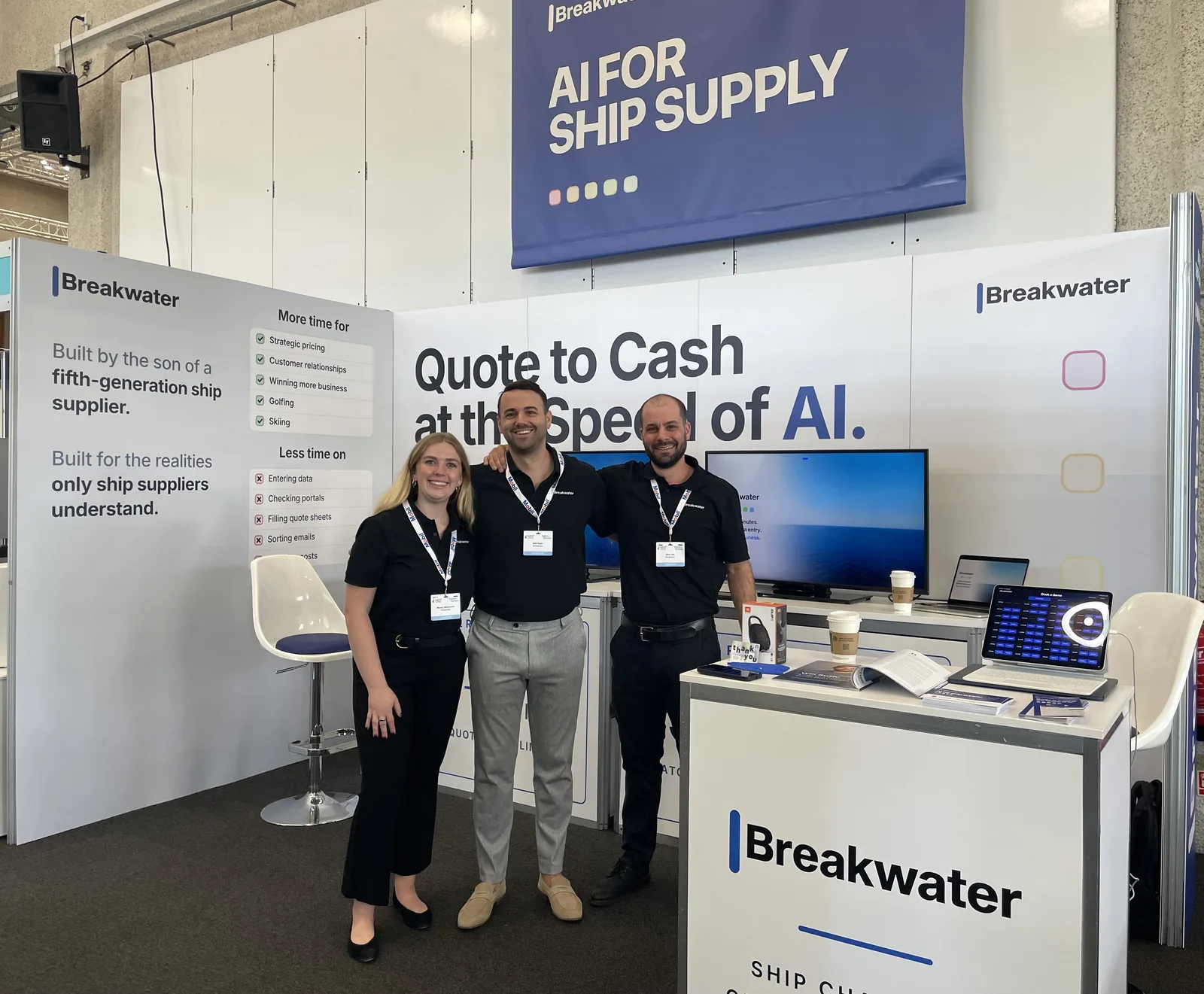
In September, the Breakwater team travelled to the QEII Centre for IMPA London 2026, where we demonstrated Blue Horizon, our AI quoting software for ship suppliers, and shared what we have learned about putting AI to work at the quote desk.
Two days, one booth, two iPads, and a lot of coffee.
63 live demos with ship suppliers
We ran 63 live demos across the two days, every one of them with a ship supplier. Some booked a 15-minute slot ahead of time. Most walked up with a question and stayed for the quote.
The workflow was familiar to everyone who stopped by: a request for quotation arrives by email or customer portal, and someone has to turn it into a quote the customer can trust.
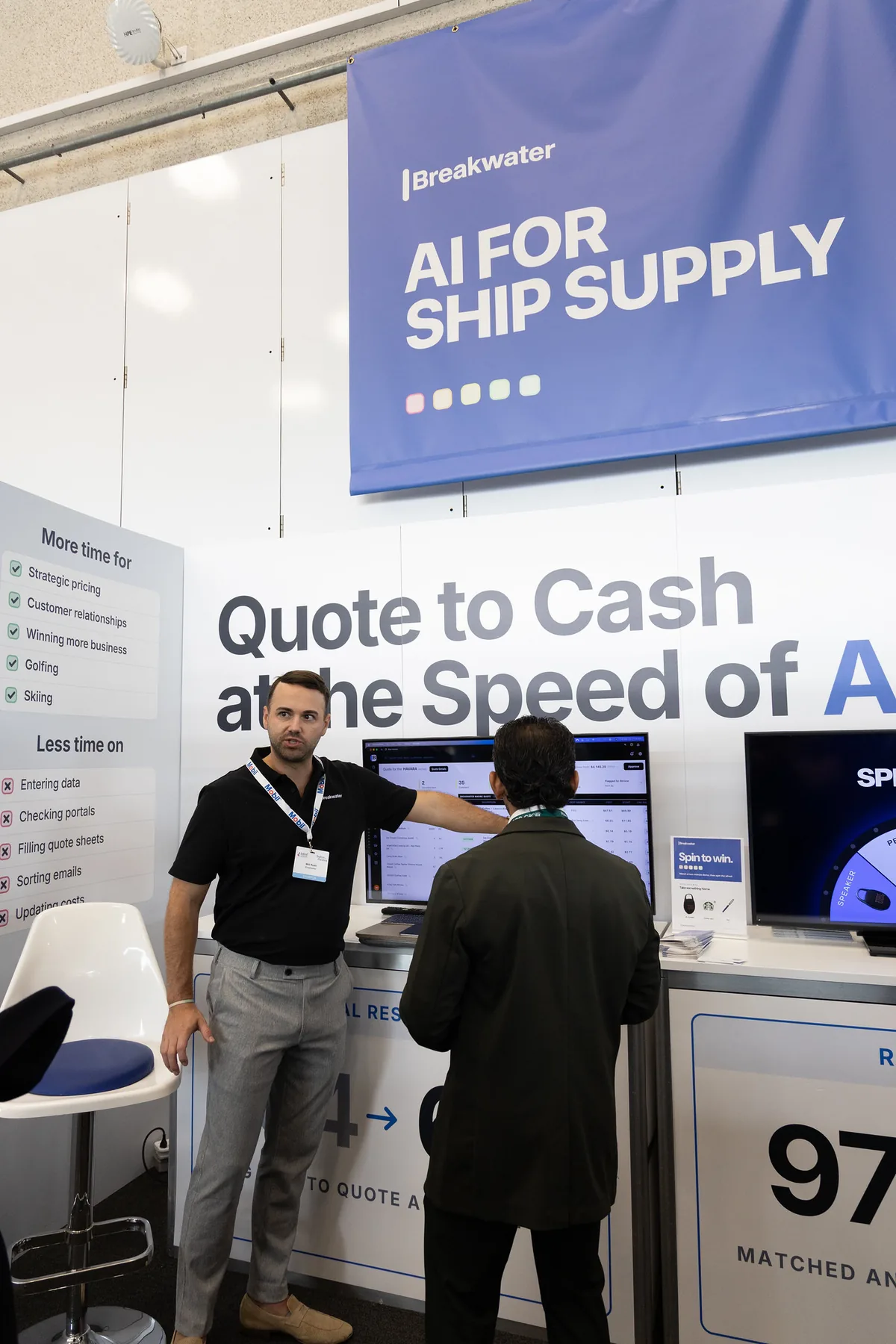
Blue Horizon prepares that quote by matching products, handling units and pack sizes, and applying costs and pricing. The quoter reviews the result, makes any changes, and approves it before it goes to the customer.
We met suppliers from the UK, continental Europe, the Middle East, Asia, and the Americas, many for the first time. Several conversations continued over dinner, and a number have since turned into signed agreements as Breakwater expands globally. We look forward to introducing those teams as they go live.
The talk: AI in Practice, A Supplier’s Perspective
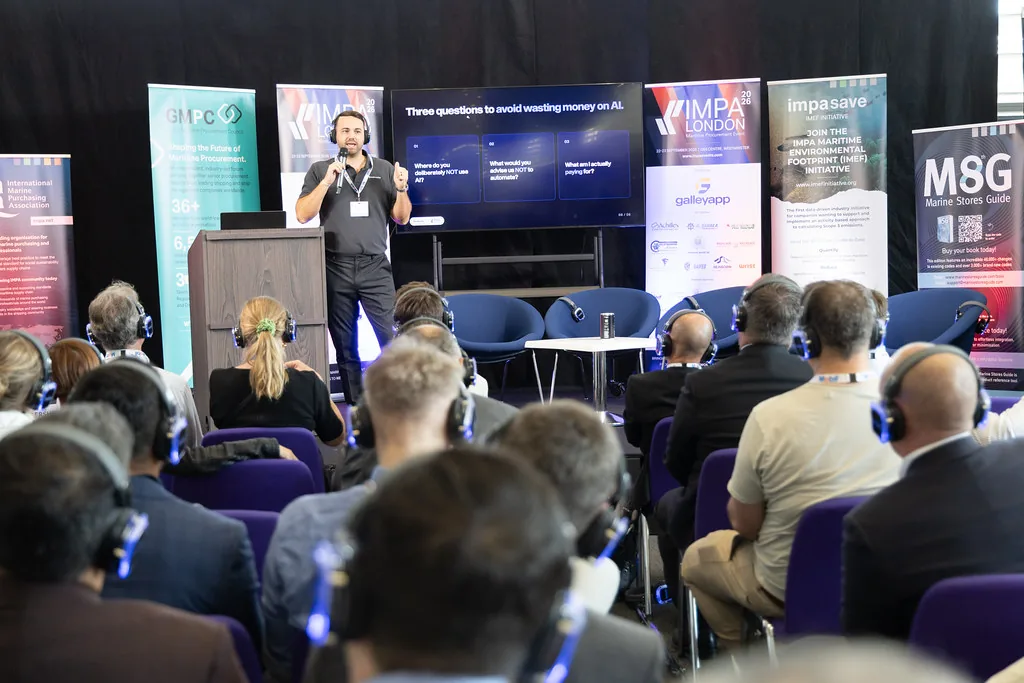
Breakwater Co-Founder and CEO Will Rush took the IMPA stage for AI in Practice: A Supplier’s Perspective, sharing what building Blue Horizon alongside a working chandlery taught us about useful AI.
Keep the expert in control
One of our first mistakes was trying to automate everything. The first fully automated quote came back from the customer with “only 2 prices that were incorrect.”
That was enough to make the problem clear. A quote needs someone who understands the customer, checks the details, and takes responsibility for what gets sent.
We changed the workflow so the system does the preparation and the expert stays in control. The feedback that followed included “didn’t have to change one thing” and “a major speed up to the workflow.”
That is the goal: take the repetitive work off the quoter’s desk while keeping their judgment in every quote.
Understand the details behind the description
Ship supply software has to handle requests that look similar but mean very different things.
One example from the talk: “CUBE BEEF” by the pack meant Knorr bouillon; by the kilo, it meant frozen beef. The wording was almost identical. The unit changed the meaning.
Technical stores bring their own variations, where a material or specification can change both suitability and price.
This is the “jazz” of ship supply. Product descriptions, units of measure, pack sizes, and customer preferences all affect what belongs on the quote. Useful AI has to work with that detail.
Measure what changes for the business
Results shared during the talk included:
- 93% less time to complete quotes.
- 34% more quotes completed for deliveries within three days.
- 51.8% more revenue per dollar spent on office salaries.
These figures are averages across live Blue Horizon clients, measured six months after go-live. For one implementation in detail, read the Delaware Ship Supply story.
The personal feedback mattered too. Clients told us about being able to take a two-week vacation and spending more of their time on unusual requests instead of routine quoting.
Those are the outcomes we want to measure: time saved, capacity gained, and more room for experienced people to focus on the work that needs them.
Ask three questions before buying AI
Will closed with three questions for anyone evaluating an AI provider:
- Where do you deliberately choose not to use AI?
- What would you advise us not to automate?
- What are we actually paying for?
The answers should make clear how the technology fits your operation, where human judgment belongs, and how you will measure whether it is working.
What we took home
The conversation has moved toward adoption
Compared with a year earlier, our conversations in London had changed. Suppliers were discussing pilots, implementation, accuracy, and control. Many were working through how AI would fit their business and what results they should expect.
The questions were sharper, and the interest was increasingly tied to a decision.
Consistent results are the real test
A recurring concern among teams experimenting with AI was reliability: an impressive result on one request, an unpredictable result on the next, and no clear measure of the time or money saved.
Our experience has been that reliable RFQ automation depends on much more than generating an answer. It needs usable product data, purchasing and pricing history, unit and pack logic, and a review process that catches the exceptions.
Those details determine whether a team can use the system throughout a normal working day.
Procurement is the next opportunity
Our London conversations also reinforced where we want to go deeper: supplier pricing, purchasing, and procurement.
The opportunity is to connect more of the work that follows a successful quote. Supplier cost updates can inform pricing, purchase orders can be prepared from won quotes, and procurement decisions can draw on the same product and purchasing history used by the quoting team.
Extending that connected workflow is a focus of our roadmap, and it was where many of our conversations in London ended up.
Thank you to IMPA for the stage and to everyone who stopped by the booth.
If we missed each other in London, we would be happy to show you how Blue Horizon turns an incoming RFQ into a quote ready for review. Email will@breakwateros.com to arrange a 15-minute demo.
Related reading: How to Reduce AI Processing Costs: Lessons From Ship Supply.
Or email will@breakwateros.com and we will set one up.