
 Customer Login
 International Shipsuppliers
 International Marine
 Original story
What Happens When AI Learns Ship Supply
The manual workflows behind ship supply are finally becoming intelligent.
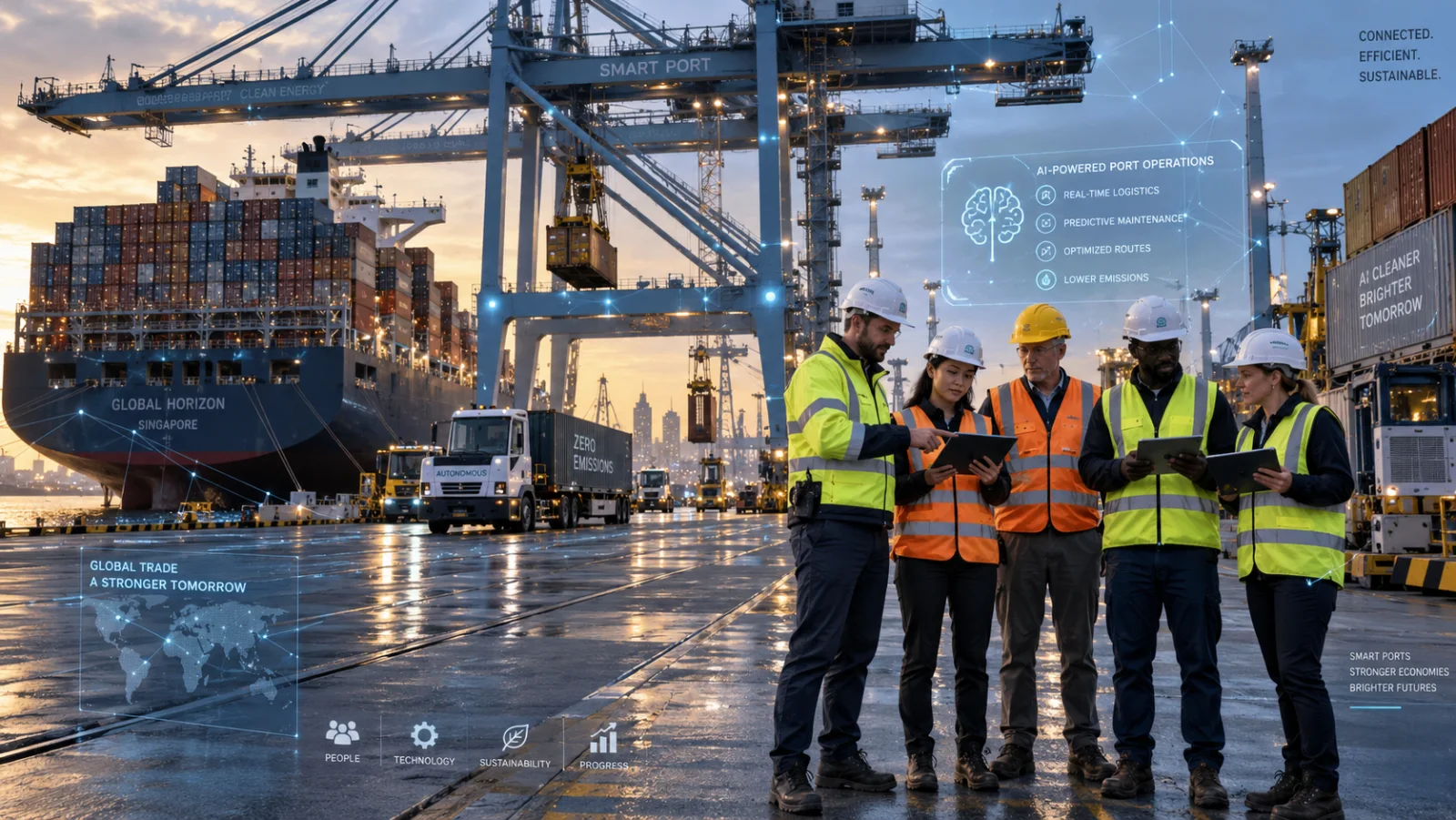
For most ship suppliers, employees still spend a huge chunk of their day keying in data. Typing inventory codes. Updating supplier costs. Calculating conversion rates. Processing quote requests. The actual operational workflows that run a chandlery still depend heavily on people manually updating systems. In an industry where responsiveness drives revenue, that becomes a real problem. Winning more orders means processing more spreadsheets, more PDFs, more invoices, and more paperwork, until the bottleneck isn’t the business. It’s the technology.
What if employees never had to process another Excel spreadsheet or comb through another PDF? What if that time went toward buying smarter, never missing a quote, responding faster, and delivering a higher level of service?
Breakwater OS is an AI-native workflow automation platform built specifically for ship supply.
Built by a Ship Chandler's Son
Founded by Will Rush — son of 5th-generation ship supplier Don Rush (Delaware Ship Supply) — Breakwater was born from both deep maritime roots and years of experience building AI software products.
“Being the son of a ship chandler, I naturally grew up in the business,” says Rush. “When I was younger, I stacked boxes in the warehouse and picked orders. Eventually, I worked my way up to the office, where I spent one summer literally typing the entire IMPA Catalog into an old ERP system.”
But what stood out to him even more than the old systems was the operational burden surrounding them.
“Most Saturdays growing up, my dad was at work. At night he would bring home stacks of paperwork. It made me realize just how much administrative work was required to keep the business running.”
He’d go on to spend 15 years building software products and AI systems. He started in financial technology, helping build electronic trading infrastructure used by firms like E*TRADE, Citadel, and Robinhood, then founded his own AI software company in 2020. That company partnered with more than 600 colleges and universities worldwide, scaled to over 100,000 customers, and raised capital from venture firms that had previously backed companies like Amazon, Snowflake, and OpenAI. Rush sold the business in 2025.
Around the same time, his father Don was starting to think about retirement. Rush agreed to help modernize Delaware Ship Supply’s tech stack before the transition.
“Twenty years later, I realized they were still using the same ERP system I had used as a teenager.”
Rush wasn’t expecting to build a new startup in ship supply.
“I honestly just wanted to help make my dad’s last chapter in the business a little less operational,” says Rush. “If I could help him spend less time buried in paperwork and maybe a little more time on the golf course, I figured that was a big win.”
Within six months, Delaware Ship Supply had reduced quote processing time by more than 90%. Within one year, revenue had grown more than 21% year-over-year.
Seemingly overnight, Rush and his team were working with some of the largest ship chandlers in North America. Many shared the same reality: a system more than a decade old, no dedicated in-house technology staff, and growing curiosity around AI without a clear path forward. Breakwater helped these companies modernize operations without massive consulting fees or disruptive multi-year migrations. The results spoke for themselves — customers began processing quotes up to 10× faster and bidding on substantially more work without increasing headcount.
Why AI Is Suddenly Working in Ship Supply
For most ship suppliers, the problem is obvious.
For decades, ship suppliers have been forced to shape their operations around the limitations of outdated ERP systems. The industry evolved, customer expectations changed, and supply chains became more complex — but the software largely stayed the same.
“Ship supply is a 24/7/365 business with a complex supply chain and countless industry-specific practices that make operations incredibly demanding. When you layer outdated technology on top of that, running a profitable business becomes very difficult. Modern software and AI are dramatically shifting that perspective though.”
AI changes the equation because modern systems can now interpret the same operational information employees work with every day: spreadsheets, supplier invoices, quote requests, PDFs, email attachments, inventory sheets, and pricing documents. Instead of employees spending hours manually moving information between systems, AI can structure, process, and route that information automatically. Employees review exceptions and approvals. The system handles the rest.


From Labor Reduction to Throughput Growth
According to Breakwater, that shift is already creating meaningful operational and financial impact for ship suppliers.
Early deployments have resulted in:
- More than 90% reductions in quote processing labor time
- 10× faster quote turnaround speeds
- More than 30% increases in quote throughput capacity
- Increased gross margins on won orders
- Substantial year-over-year revenue growth tied directly to increased operational capacity
While the narrative surrounding AI is commonly associated with reducing labor, Breakwater is proving you don’t have to reduce headcount to get ROI from modern technology.
You don't have to reduce headcount to get ROI from modern technology.
A good month in ship supply often means late nights, overloaded employees, and growing operational strain. More quotes means more spreadsheets. More orders means more paperwork.
But now, by automating the quote-to-cash workflow, suppliers can process more business, respond to more RFQs, and increase service levels without scaling administrative burden at the same rate.
In some cases, suppliers are even using that additional operational capacity to pursue entirely new revenue opportunities and spend more time strengthening customer relationships.
What Breakwater Actually Automates
Breakwater’s platform spans the full range of ship supply workflows, including:
- RFQ intake and quote processing
- Supplier price list ingestion and cost updates
- Supplier invoice and delivery receipt capture
- Purchase order processing
- Inventory and fulfillment operations
- Invoice, credit note and delivery receipt generation
- Tablet-based warehouse operations
- Accounts receivable and payables
- Financial management
Every customer’s system gets tailored to their operation over time. Breakwater doesn’t use a single shared AI model across customers. Each supplier’s workflows, pricing structures, inventory logic, and historical operational decisions continuously refine how the platform works for that specific business. As usage increases, the system gets more accurate, handling the majority of operational work automatically and flagging only the most complex decisions for employee review.
“Our team takes a lot of pride in the fact that although ship supply owners hire us, it’s often their best employees who become our biggest champions,” says Rush. “When repetitive administrative work disappears, good operators become dramatically more effective.”
- Cilantro, fresh96%
- Coriander seeds, whole74%
- Ground coriander68%
- Parsley, fresh46%
- Cumin seeds28%
A Modern Technology Stack for a Timeless Industry
“Ship supply is one of the most operationally demanding industries in the world,” says Rush. “The companies that succeed are the ones that can execute quickly, accurately, and consistently under pressure. We believe AI is becoming a way to scale that operational capability without scaling the burden that used to come with it.”
As AI adoption accelerates across maritime industries, ship supply may ultimately prove to be one of the clearest examples of where operational AI creates real-world bottom-line impact.
Not because the industry needed more software. But because it finally has technology capable of doing some of the work itself.